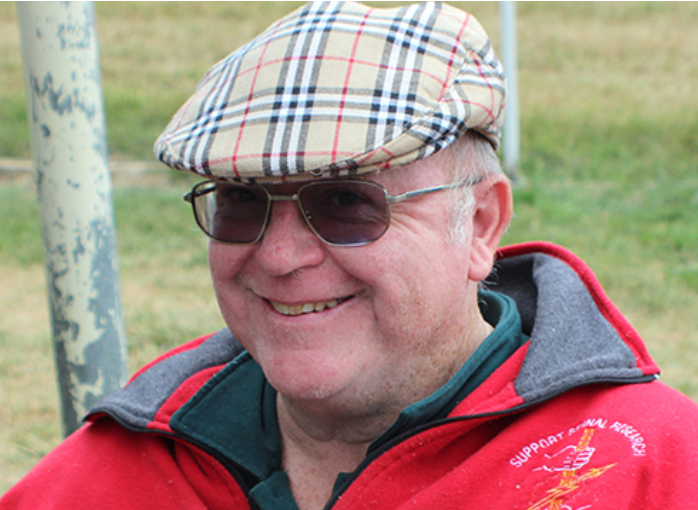
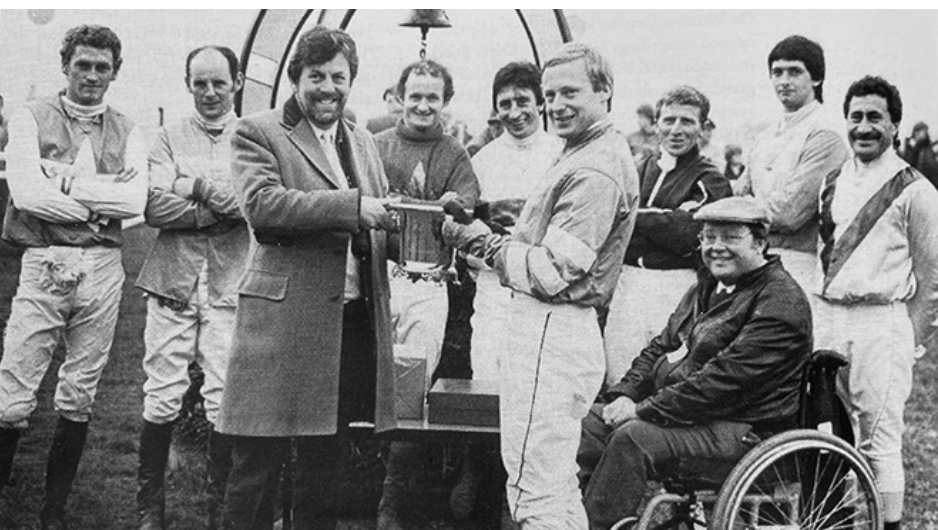
John Adams was wheelchair-bound for the majority of
his life, but legendary jumps trainer Eric Musgrove knew him before his
life changed forever.
"I met him in the early 1980s and we became very good friends," he recalled.
"I remember going to New Zealand for a week with him to look at some horses.
"One
day we were at the Trentham races at Wellington, and we were walking
down the stairs from the grandstand. John wasn't moving that well and I
asked him what the problem was.
"He said, 'I've got a growth in my
back which is a bit sore sometimes. I'm going in for an operation in a
couple of weeks. It should set me back for three weeks and then I'll be
right again'.
"We didn't think anything else about it and enjoyed the rest of the trip."
As Musgrove explained, the operation didn't go as planned.
"He
had the operation, and something went wrong," Musgrove said. "When he
woke up the doctor told him that he was going to be a paraplegic (loss
of muscle function in the lower half of the body) and unable to walk. He
spent the next six months in hospital, then came out in a wheelchair,
after going in for a routine operation. He was very unlucky."
Adams' bad luck didn't end there.
"The doctor died soon after, so he was never able to get any compensation for the mistake," Musgrove said.
LUCK TURNS
From
my own experiences with John, it seemed he never outwardly let that
setback bother him. He just adapted to his new life and pressed on.
Musgrove and others I interviewed for this piece confirmed that
impression.
"He had a great passion for jumps racing both as an
owner and promoter," Musgrove said. "And he had a bit of luck with us.
He part-owned Kosbar, who won the Von Doussa Steeple (1986), and Spanish
Minstrel, who won the Harry D Young Hurdle (1989), both at Oakbank."
THE ADMINISTRATOR
Musgrove had no trouble reeling off some of John's achievements as an administrator.
"He
joined the Australian Jumps Racing Association during the 1980s and was
a tireless worker for jumps racing. He managed to convince the
authorities in Queensland, Sydney and Canberra to run hurdle races. The
promotions for those races were fantastic and they used to get good
crowds.
"Another of his initiatives was Mooney O'Valley, when the
Valley used to host the Irish jumps jockeys and the Guinness was flowing
in the bars. They used to be great days with very big crowds.
"John
also arranged for the Australian jockeys to head overseas and ride in
challenges against the English, Irish, French and even the Japanese
riders one year. And of course he had them come here as well."
THE MONEY MAKER
John's
flare for promotion of jumps racing extended to raising much-needed
funds for the sport. Musgrove fondly recalled one phase in particular.
"He
was highly intelligent. Before poker machines were legalised in
Victoria (1991), sporting clubs were allowed to have one or two slot
machines, to help with their fundraising. John arranged for a few clubs
to put in a machine where they'd get a cut and so would the AJRA.
"He
was able to fund not only the association, but also his salary as
executive officer. Some of those machines did so well we were able to
sponsor some races with the profits."
John Rothfield (aka Dr Turf) also had memories of Adams' money-making skills.
"He used to run a bingo game in the 1980s, which was very popular," Dr Turf said.
"It was also quite lucrative for him with his fee as the compere," he added with a laugh.
THE WRITER
Like Musgrove, Dr Turf was a long-time friend of John's.
"The
first time I met him, I was talking at a fundraiser for him to get a
new car after his operation had gone wrong. I think it might have been
at the Northcote footy club, which he was involved with. We got chatting
and hit it off straight away. We had a shared love of racing and jumps
racing.
"John used to love rorts in sports and racing. He'd
regularly send me clippings of something that had happened somewhere. It
might have been a driver pulling one up at the Swedish trots or a
jockey jumping off in a Czechoslovakian jumps race.
"He gathered so many, we decided we should put them in a book, which we called Great Australian Sports Rorts," he explained.
A once-in-a-century pandemic prevented a second published collaboration.
"We
were actually working on another book with the VRC (Victoria Racing
Club) before COVID hit. It was going to be a social history on the
Melbourne Cup. So, we'd mention the winner, but instead of giving the
details of the event, we'd point out something different about the horse
or the owner or the trainer.
"For instance, John had found out
that the 1954 Melbourne Cup winner, Rising Fast, got his name from the
front page of a New Zealand newspaper. The owner was struggling to come
up with a name for his horse, when he noticed the headline, 'Wheat
prices are rising fast' on the front of the paper.
"It was coming along quite well but then COVID hit."
THE SAVIOUR
Musgrove is adamant that without John's involvement, jumps racing wouldn't be around today.
"The
sport was under a lot of pressure back in the 1980s, but John was
outstanding at promoting the good aspects of the sport. He worked very
hard with the VRC to ensure the programming was right for the jumps.
"He
got the horses and riders promoted in the papers and on television. I'd
go so far as to say that if he hadn't been in charge then, jumps racing
wouldn't be around. It was through his enthusiasm and passion that we
were able to keep going."
THE GOOD JUDGE
Former
Australian Jockey Club chairman Bob Charley also recalls Adams fondly,
particularly the day he received some astute advice from him.
"I
first met John when I started to get interested in jumps racing. I
bought a couple of tried horses and asked him for a trainer to send them
to. I said I wanted to give them to a young trainer on the way up. "He
said, 'There's this young guy down at Warrnambool who used to be a jumps
jockey. I think he might go okay at it. His name's Ciaron Maher'.
"So
I rang Ciaron up and sent two horses down to him. One was Brough
Superior. who ended up winning a Hamilton Cup (2008) and finishing
second in a J.J. Houlahan Hurdle (2009).
"The other was Man Of
Class, who won the Grand National Steeple (2011) at 80/1, and I didn't
have a zack on him. He also won the Great Eastern (2013) and had the
Grand Annual won all the way down the straight until Banna Strand got
him on the line.
"I ended up having a long history in jumps racing, all because John suggested I send my horses to Ciaron Maher."
THE HISTORIAN
John
was instrumental in creating the Gallery of Champions, jumping's
version of the Hall of Fame. He teamed with Ned Wallish (historian),
Brian Meldrum (journalist), George Purcell (trainer) and Alf King
(bookmaker) to identify horses, jockeys and trainers to be honoured. A
wall in the Hill Stand at Flemington was adorned with pictures of the
champions and unveiled at a 2003 race meeting.
TOO SOON
The news of John's death came as a shock to many, in particular Dr Turf.
"I
caught up with him about a month ago. We had a great lunch and he
mentioned he was going into hospital for an operation to have some gall
stones removed. Next thing I knew, he'd apparently had a heart attack
during it all and sadly we've lost a great man."




 Topic Options

 Post Options
 Thanks(0)